


A character can be beautifully designed and still feel lifeless if they only ever have one expression. Readers and players connect with characters through subtle emotional shifts — a raised eyebrow, a tight smile hiding worry, wide eyes betraying genuine fear. Capturing that full emotional range used to mean either hiring an illustrator for dozens of individual poses or settling for a single static reference image.
An AI image generator from text makes building a full expression set genuinely manageable, and Dreamina handles this especially well, keeping a character recognizably consistent across a wide range of emotional states.
Here’s how to give your character a genuine emotional range.
Why expression range matters more than a single hero shot
A single polished character portrait is useful for a cover or a profile, but storytelling — whether in a comic, game, or animated project — depends on showing emotional change. Without a range of expressions to draw from, character moments end up feeling flat or get described in text instead of shown visually.
Mapping out the emotions your story actually needs
Before generating anything, list the key emotional beats your character experiences across the story: determination, heartbreak, quiet relief, barely contained anger. This list becomes your expression roadmap, ensuring you build exactly what the narrative requires rather than a random assortment of generic faces.
- Core emotions tied to major plot moments
- Subtle in-between states, like suspicion or hesitation
- Physical reactions, like exhaustion or sudden alertness
Keeping identity consistent while emotion changes
The real challenge in an expression set isn’t generating emotion — it’s making sure the character still looks unmistakably like themselves in every version. Locking in consistent details like eye color, facial structure, and signature features in every prompt helps maintain that identity across a growing set of images.
From single portrait to full expression set in three moves
Dreamina makes building out a character’s emotional range far less tedious than the traditional illustration process.
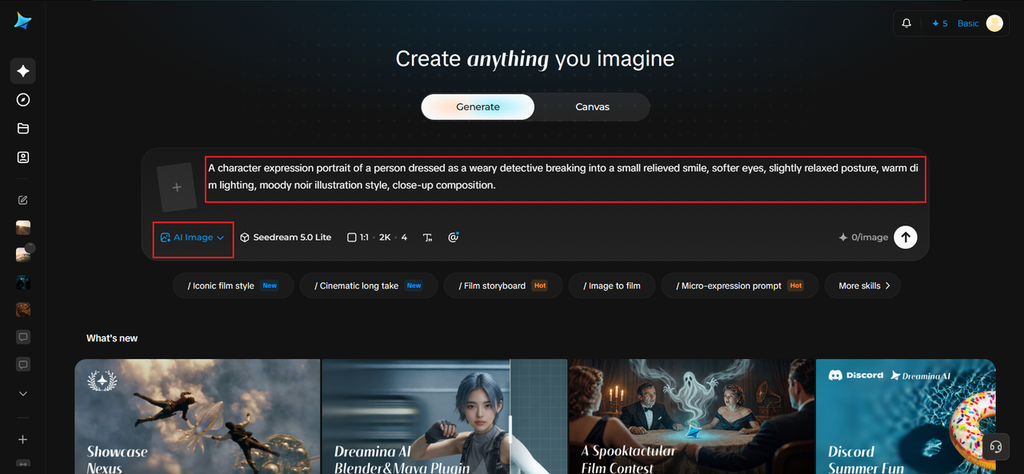
Step 1: Write a detailed text prompt
Go to Dreamina and describe your character’s specific emotional expression in detail, including facial cues and body language. Upload a reference image of your established character design to keep consistency across the set.
A detailed sample prompt: A character expression portrait of a person dressed as a weary detective breaking into a small relieved smile, softer eyes, slightly relaxed posture, warm dim lighting, moody noir illustration style, close-up composition.
Step 2: Adjust parameters and generate
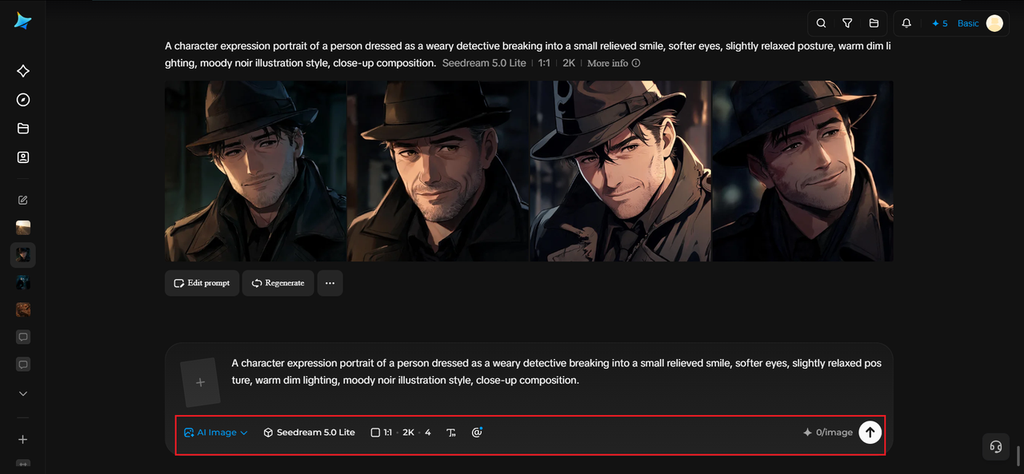
Select Image 5.0 Pro, powered by Seedream 5.0 Pro, for accurate, nuanced facial detail and reliable character consistency, then set your aspect ratio, canvas size, and resolution — 1K for quick reference sheets, 2K for final publication-ready art. Click the generate icon to render the expression.
Step 3: Customize and download
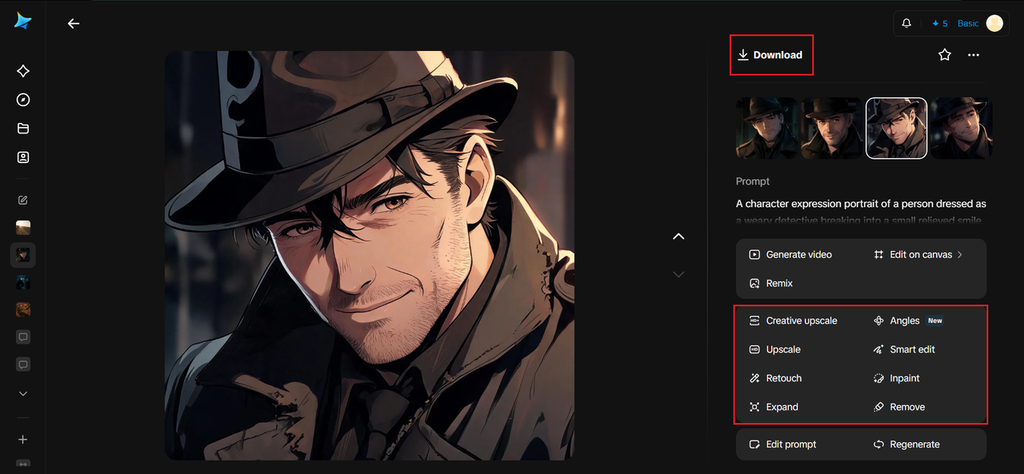
Refine the result using Dreamina’s tools: inpaint to adjust specific facial details like eyebrow angle or mouth shape, expand to add more surrounding context, remove to eliminate distracting background elements, and retouch for a final polished look. Once it’s ready, click Download.
Dreamina’s models and character consistency
Dreamina provides access to multiple image generation models, and for expression work specifically, consistency across generations is the most important factor to consider.
Seedream 5.0 Pro, the newest and most advanced model available, is particularly strong here because of how reliably it preserves a character’s core features across different emotional states and reference uploads — arguably the single hardest technical challenge in this kind of project.
Nano Banana offers faster generation for quickly testing a range of rough expression ideas before refining the strongest ones. GPT Image 2 handles detailed emotional and physical description well, useful when a specific expression requires very precise instruction to capture correctly.
Reading emotion through more than just the face
The strongest expression work considers the whole upper body, not just facial features. Shoulder tension, hand position, and posture all reinforce an emotional state, and including these details in your prompt produces results that feel more genuinely alive than a face alone.
Organizing your set for practical use
As your expression collection grows, organizing it clearly — labeled by emotion and story context — makes it genuinely usable during actual production, whether that’s storyboarding a comic panel or referencing mood in an animation brief.
Spotting when an expression set has drifted off-model
- Check the same three or four anchor features every time — eye shape, nose, jawline, and any signature detail (a scar, freckle pattern, hairstyle) are the fastest way to catch when a generation has quietly drifted from the reference
- Compare new expressions against the original portrait side by side, not just against the last one generated — small shifts tend to compound gradually across a set, so checking only the most recent image can miss slow drift
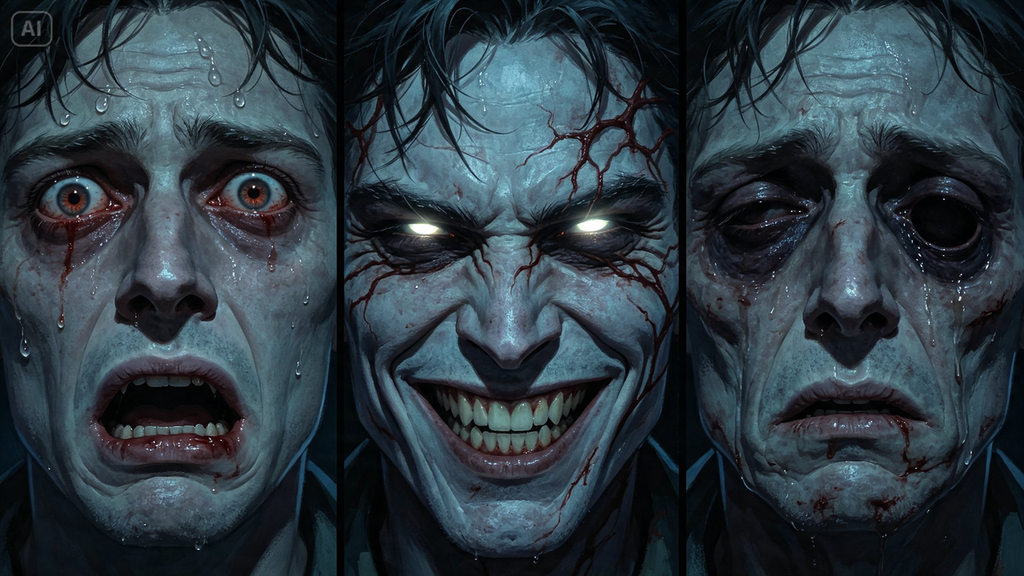
- Watch for “personality bleed” from the emotion itself — a strong expression like rage or terror can sometimes push proportions or features further from the reference than a subtle one like mild amusement, so extreme emotional states are worth double-checking
- Regenerate from the original reference image, not a previous expression, when building each new emotional state — chaining generations off one another is often where consistency quietly breaks down
- Keep a “control” neutral expression on hand to re-check against periodically, especially on larger sets where it’s easy to lose track of the character’s baseline after a dozen emotional variations

Where these expression sets get used
A well-developed expression set supports creative work across several formats:
- Comic and graphic novel panel planning
- Visual novel and game dialogue systems
- Animation reference sheets and mood boards
- Character pitch decks for collaborators and publishers
Giving your character a real emotional life
A character only feels real when their face can carry more than one feeling. With Dreamina and the consistency-focused precision of Seedream 5.0 Pro, building that full emotional range is genuinely achievable, even for a solo creator working without an illustration team — and it’s free to start with your character’s very next expression.